STOREINSIDER.HU: http://storeinsider.hu/cikk/szecsenybe_koltozott_a_funky_forest
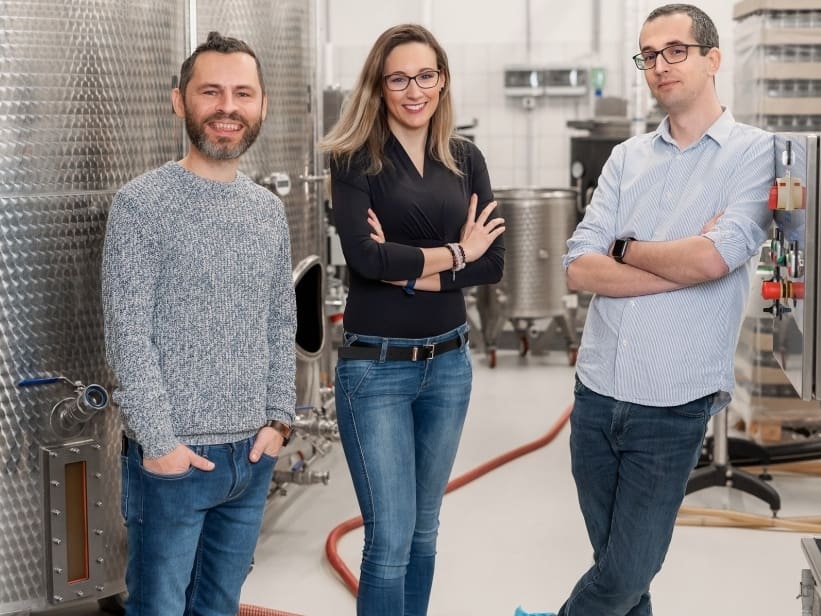
Magyarország hátrányos helyzetű térségében, a Nógrád megyei Szécsényben található gyümölcs- és zöldségfeldolgozó üzemben készít egyedi ízkombinációjú gyümölcsitalokat és smoothie-kat egy magyar cég. Céljuk, hogy hozzájáruljanak a magyar vidék fejlesztéséhez.
Magyarország hátrányos helyzetű térségében, a Nógrád megyei Szécsényben található gyümölcs- és zöldségfeldolgozó üzemben készít egyedi ízkombinációjú gyümölcsitalokat és smoothie-kat egy magyar cég. Céljuk, hogy hozzájáruljanak a magyar vidék fejlesztéséhez, európai szintű munkakörülményeket biztosítsanak a térségben élőknek, illetve egészségtudatosságra érzékenyítsék fogyasztóikat.
A fenntartható élelmiszergyártáshoz kapcsolódó tudás elmélyítése, valamint a magyar vidék szeretete, élhetővé tétele hívott életre egy innovatív gyümölcs- és zöldségital termékcsaládot. A 100 %-ban magyar tulajdonban álló cég üzleti modelljének megalkotásakor fontos szempont volt, hogy az alapanyagok nagyrészt hazai, illetve nyomon követhető forrásból származzanak, és hogy az üzemet hátrányos helyzetű térségben építsék fel, hozzájárulva ezzel a szakképzett munkaerő helyben tartásához. Egyedi ízkombinációinkat szándékosan úgy alkották meg, hogy azok nagy részéhez hazai gyümölcstermelők tudják biztosítani az alapanyagot.
A Funky Forest üzeme Szécsényben közel 700 m2-en terül el, amelyhez 600 m2-es hűtőházi kapacitás kapcsolódik, így az alapanyag-utánpótlás egész évben zökkenőmentes. A működés alapelve az adalék- és tartósítószermentes előállítás, a gyártás ökológiai lábnyomának minimalizálása, valamint prioritást élveznek a helyi alapanyagok és a nyomonkövethetőség. A gyárhoz tartozó közösségi hűtőház a helyi gazdaságfejlesztés remek példája: jó lehetőség a környékbeli termelőknek az értékesítésre és a továbbfejlődésre. A lokális feldolgozás így jóval több hozzáadott értéket ad a megtermelt gyümölcsöknek és zöldségeknek. Károsanyag hozzáadása nélkül, környezetkímélő technológiával fejlesztik a termékeket, amelyekben kizárólag gyümölcsök és zöldségek találhatóak.
Ezeket a tartósítás miatt maximum 80 fokon pasztőrözik, és úgy töltik környezetbarát üvegcsomagolásba. Az üzem és a hűtőház energiaigényét pedig részben napelemek segítségével biztosítják. Jelenleg óránként akár 1000 palack gyümölcsital is készül a szécsényi üzemben, munkát biztosítva az ország egyik legszegényebb részén, és segítve a magyar agrárium fennmaradását.
(forrás: Store Insider)
How Betzoid Documents English Football Betting Pattern Changes Over Years
English football betting has undergone remarkable transformations over the past several decades, evolving from simple match outcome wagers to sophisticated multi-layered prediction markets. Betzoid has emerged as a comprehensive platform for tracking these behavioral shifts, documenting how punters approach wagering on the Premier League, Championship, and lower divisions. By analyzing historical data spanning multiple seasons, Betzoid provides invaluable insights into how economic conditions, technological advances, and regulatory changes have reshaped betting patterns across English football. Understanding these documented trends offers a fascinating window into both the sport’s evolution and the psychology of those who follow it most closely.
The Evolution of Market Preferences in English Football Betting
The landscape of English football betting has shifted dramatically since the formation of the Premier League in 1992. Betzoid’s historical archives reveal that traditional match result betting dominated the market throughout the 1990s and early 2000s, with approximately 75% of wagers placed on simple win-draw-win outcomes. However, the platform’s data shows a marked transition beginning around 2008, when in-play betting technologies became widely accessible. This technological revolution coincided with increased smartphone adoption, fundamentally altering when and how bettors engaged with matches.
By documenting betting volumes across different market types, Betzoid has identified several key pattern shifts. Goal-related markets, including both teams to score and over/under totals, experienced a 340% increase in participation between 2010 and 2018. This surge reflected a broader understanding of statistical analysis among bettors, who began recognizing that defensive vulnerabilities and attacking strengths could be quantified and exploited. The platform’s records indicate that Championship matches, traditionally overlooked by casual bettors, saw particularly notable growth in specialized markets as data analytics made lower-league football more transparent and accessible.
Betzoid’s comprehensive tracking also highlights the impact of tactical evolution on betting preferences. The rise of possession-based football under managers like Pep Guardiola and the increasing prevalence of high-pressing systems have directly influenced which markets attract the most attention. Corner kick betting, for instance, grew by 180% between 2016 and 2020, as bettors recognized patterns in how dominant teams accumulated set pieces. Those interested in exploring these documented trends further can view more detailed statistical breakdowns that illustrate the correlation between tactical innovations and market popularity shifts.
Regulatory Changes and Their Documented Impact
The regulatory environment surrounding English football betting has experienced substantial upheaval, and Betzoid has meticulously documented how these changes influenced betting behavior. The 2014 Gambling Act amendments, which introduced the point-of-consumption tax, initially raised concerns about market contraction. However, Betzoid’s data reveals a more nuanced reality. While overall betting volumes decreased by approximately 12% in the immediate aftermath, the composition of wagers became more sophisticated, with accumulator bets and combination markets gaining prominence as bettors sought higher-value opportunities.
The introduction of stricter advertising regulations in 2019, including the voluntary watershed ban on television gambling advertisements, created another inflection point captured in Betzoid’s records. The platform documented a 23% decline in casual, impulse-driven betting during televised matches, but simultaneously recorded a 17% increase in pre-match research-based wagering. This shift suggested that regulatory measures successfully reduced spontaneous betting while encouraging more deliberate, informed participation among serious football followers.
Betzoid’s documentation also extends to the impact of responsible gambling initiatives. The implementation of deposit limits and self-exclusion programs, which gained momentum after 2018, correlates with observable changes in betting frequency patterns. The platform’s data shows that average bet sizes increased by 8% while betting frequency decreased by 19% among regular users, indicating a shift toward more considered, less frequent wagering. These documented behavioral changes provide valuable evidence for policymakers assessing the effectiveness of harm-reduction measures in the betting industry.
Seasonal and Competitive Patterns Across English Football Divisions
One of Betzoid’s most valuable contributions lies in its documentation of seasonal betting patterns across English football’s hierarchical structure. The platform’s multi-year data reveals distinct behavioral differences between how bettors approach the Premier League versus lower divisions. Premier League matches consistently attract 65-70% of total betting volume despite representing only a fraction of English football fixtures. However, Betzoid’s records show that Championship playoffs and decisive relegation battles can temporarily shift this distribution, with certain high-stakes lower-league matches generating betting interest comparable to mid-table Premier League encounters.
The platform has identified cyclical patterns that repeat with remarkable consistency. December and January, traditionally congested periods in the English football calendar, see betting volumes increase by 35-40% compared to autumn months. Betzoid’s documentation attributes this surge to multiple factors: increased match frequency, holiday leisure time, and the heightened unpredictability that accompanies fixture congestion and squad rotation. Conversely, international break periods consistently show 45-50% declines in betting activity, demonstrating the extent to which English domestic football drives market engagement.
Betzoid has also tracked the emergence of niche betting interests around specific clubs and narratives. The platform’s data shows that newly-promoted teams generate disproportionate betting attention during their first Premier League season, with 30% more wagers placed on their matches compared to established mid-table clubs. Similarly, managerial changes trigger measurable spikes in betting activity, with the first three matches under new management attracting 25% higher volumes than the preceding fixtures. These documented patterns reveal how narrative elements and perceived uncertainty drive betting engagement beyond pure statistical analysis.
Technological Integration and Data-Driven Betting Trends
The integration of advanced analytics into English football betting represents perhaps the most significant pattern change documented by Betzoid. The platform’s historical records show that the proliferation of expected goals (xG) metrics, heat maps, and possession statistics has fundamentally altered how informed bettors approach wagering decisions. Between 2015 and 2022, Betzoid documented a 280% increase in bets placed on markets directly correlated with advanced metrics, such as shots on target and possession percentages.
This data-driven revolution has created a bifurcated betting population, clearly visible in Betzoid’s documentation. Sophisticated bettors increasingly rely on statistical models and algorithmic predictions, while casual participants continue favoring traditional approaches based on team reputation and recent form. The platform’s records indicate that statistically-informed bettors demonstrate 15-20% better long-term returns, validating the analytical approach while simultaneously making certain markets more efficient and harder to profit from consistently.
Betzoid has also documented the rise of cash-out features and partial settlement options, which have transformed betting from a purely predictive exercise into an active management process. The platform’s data shows that 42% of in-play bets now utilize cash-out functions at some point, reflecting a fundamental shift in how bettors conceptualize risk management. This behavioral change has particularly impacted English football betting, where matches frequently feature momentum swings and late drama that create cash-out opportunities. The documented adoption of these features demonstrates how technological capabilities shape betting psychology and strategy.
The comprehensive documentation maintained by Betzoid provides an invaluable historical record of how English football betting has evolved across multiple dimensions. From regulatory impacts and tactical innovations to technological integration and seasonal patterns, these documented changes reveal a market in constant flux, shaped by external forces and internal dynamics. As English football continues evolving and betting technologies advance further, the patterns documented by platforms like Betzoid will remain essential for understanding the complex relationship between sport, prediction, and human behavior. This historical perspective not only illuminates past trends but also provides the foundation for anticipating future developments in this dynamic intersection of football and wagering culture.